Official partner

Reduce PayPal Dispute Riskwith Tracking Sync

Once a supplier ships, DSers sends the tracking number and carrier from the fulfilled order to the PayPal account linked to that store. Keep transaction details current, support faster fund release, and maintain a clearer fulfillment record if a buyer opens an Item Not Received PayPal dispute.

Merchants syncing PayPal tracking with DSers

How DSersMoves Fulfillment Trackingto PayPal

Automatic Tracking Sync for PayPal Transactions

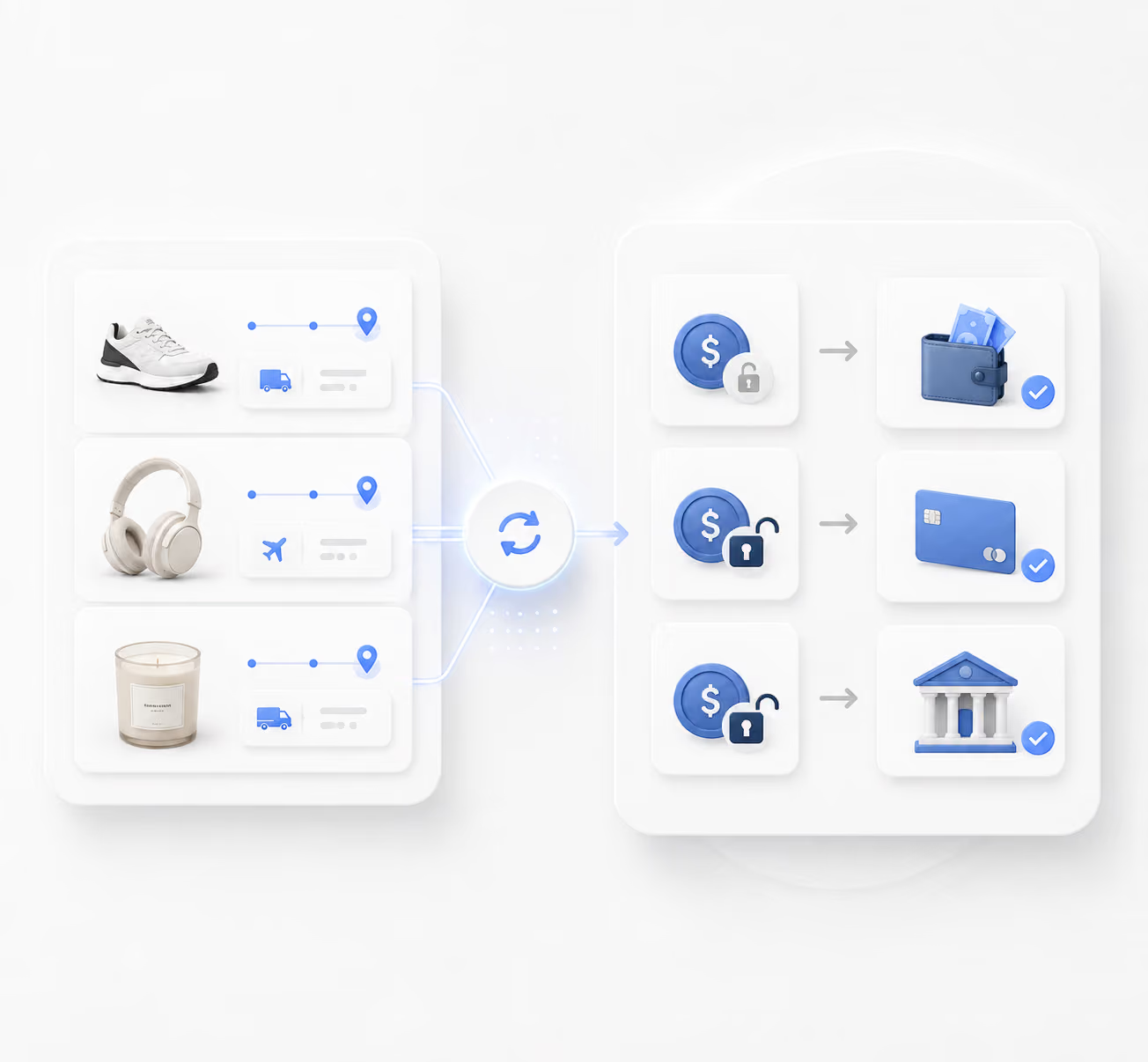
After a supplier ships, DSers brings the tracking number into the order, updates the connected store, and sends the tracking number and carrier to the PayPal account bound to that store. PayPal can then update the matching transaction to Shipped. Keeping this record current may reduce missing-tracking concerns and support faster fund release, but timing and eligibility remain subject to PayPal policies.

Release workflow in the DSers interface

How DSers Returns Tracking Data to PayPal

DSers does not manage or decide PayPal disputes. It handles the earlier fulfillment data chain: moving supplier tracking into DSers, updating the connected store, and sending the core shipment reference to the PayPal account that received the customer's payment.

From Store Order to PayPal Transaction in Four Steps

The store context stays with the order throughout the workflow, so DSers can send tracking to the PayPal account bound to the correct storefront instead of treating every payment account as interchangeable.

  1. 01

    Bring the store order into DSers

    After a customer orders from a connected store, DSers syncs the order into Open Orders and retains the store it belongs to. That store relationship is what later determines which authorized PayPal account should receive the tracking update.

  2. 02

    Place and pay for the supplier order

    Process the order through the relevant supplier workflow. For eligible 1688 wholesale and Agent Network orders, PayPal can also be used for supplier payment after the agent provides a quote. When the supplier ships, a tracking number becomes available.

  3. 03

    Update DSers and the connected store

    DSers brings the tracking number into the order and marks fulfillment in DSers and the store. Depending on your Fulfillment Settings, the store can also send its normal shipping confirmation to the customer.

  4. 04

    Send the shipment reference to PayPal

    DSers sends the tracking number and carrier to the PayPal account bound to that store. PayPal can then update the matching transaction to Shipped. Fund-release timing and Seller Protection eligibility remain subject to PayPal policies.

What the Sync Covers—and What Still Stays in PayPal

The integration keeps essential shipment identifiers connected to the transaction. It is not a dispute-management service and does not replace the merchant's response in the Resolution Center.

DSers sends

The fulfilled order's tracking number and shipping carrier, linked through the store's authorized receiving account.

DSers does not send

Tracking URLs, customer messages, invoices, product descriptions, photos, or other supporting dispute documents.

The merchant still handles

Monitoring the Resolution Center, replying to disputes or claims, and submitting any additional evidence PayPal requests.

Manual PayPal Updates Compared with DSers Sync

Automatic tracking sync removes repetitive transaction-by-transaction entry while keeping responsibility for the actual PayPal case with the merchant.

TaskManual workflowWith DSers
Tracking entryCopy the number and carrier into each PayPal transaction.Send both automatically after the order is fulfilled with tracking.
Transaction matchingSearch for the customer's payment record manually.Use the receiving PayPal account already mapped to the store.
Dispute readinessRisk leaving the transaction without a shipment reference.Keep core tracking attached as part of the fulfillment workflow.
Case responseGather evidence and reply inside PayPal.Still handled by the merchant inside PayPal.

When This Connection Is Most Useful

Multiple storefronts

Each store needs tracking routed to the PayPal account that actually receives its customer payments.

High order volume

Supplier tracking should update DSers, the store, and PayPal without repeated copying between systems.

Item Not Received concerns

You want the PayPal transaction to contain a shipment reference before a buyer reports that an order has not arrived.

Automate more with DSers.

Connect the PayPal account that receives payments for each store, then let DSers carry tracking numbers and carriers forward after fulfillment.

Start for Free

FAQ

What is a PayPal dispute, and how can DSers help?

A PayPal dispute lets a buyer and seller discuss a transaction problem in the Resolution Center. If the case is escalated to a claim, PayPal reviews the available information and decides the outcome. DSers does not open, answer, or decide disputes. It supports an earlier operational step by sending tracking numbers and carriers from fulfilled orders to matching PayPal transactions, helping keep shipment details visible before an Item Not Received concern arises.

How does DSers send tracking information back to PayPal?

A store order first enters DSers with its store context. After you place the supplier order and the supplier ships, DSers receives the tracking number, updates the order in DSers and the connected store, then sends the tracking number and carrier to the PayPal account bound to that store. PayPal can update the matching transaction to Shipped. To enable the connection, use Settings > Fulfillment Settings > Send tracking number to PayPal, authorize PayPal, and bind the receiving account to the correct store.

What information does DSers sync to PayPal, and when?

After an order is fulfilled with tracking, DSers sends its tracking number and shipping carrier to PayPal. The sync does not include a tracking URL, customer messages, invoices, product descriptions, photos, or other dispute documents. Tracking can make the shipment record easier to identify, but it does not guarantee Seller Protection, faster fund release, or a favorable dispute outcome. Merchants still need to monitor the PayPal Resolution Center and provide any evidence PayPal requests.

How many stores and PayPal accounts can I manage with DSers?

Current plan limits are: Basic or Custom Basic, 3 stores, 1 sales-channel platform, and 1 PayPal account; Advanced, 10 stores, 1 platform, and 2 PayPal accounts; Pro, 25 stores, 3 platforms, and 5 PayPal accounts; Enterprise, 50 stores, 5 platforms, and 10 PayPal accounts. Store and PayPal-account limits are separate. You can use the Store Switcher to work across My Products, Open Orders, Tracking, and Report without a separate DSers login for every storefront.

Which PayPal account should I connect to each store?

Bind each store to the PayPal account that actually received that store's customer payment. If a different account is connected, DSers cannot find the matching PayPal transaction and the tracking information will not sync. One PayPal account can be authorized by only one DSers account. If you operate several stores, connect the appropriate receiving account for each store and keep within the PayPal-account limit of your DSers plan.