



How to Evaluate Dropshipping Products Before Selling | DSers 1688 Dropshipping



Finding a promising product is an important step when building and growing a dropshipping store.
Before importing any item into your store catalog, you need to assess multiple critical factors that shape your selling strategy — including market demand, competitive landscape, pricing margins, and supplier reliability.
Products that look attractive at first glance do not always align with your store positioning and long-term business goals. A standardized product evaluation workflow helps you judge whether an item deserves a trial, so you avoid wasting budget, time, and marketing resources on low-potential listings.
In this guide, we share a practical, actionable product evaluation framework. We will also cover how sourcing tools like DSers 1688 Dropshipping can streamline your end-to-end product research process.
Start by Defining Your Target Customer
All product evaluation should begin with your audience.
A viable product must solve a clear pain point or deliver tangible value, while matching the preferences and purchasing power of your target customers.
Ask yourself these key questions:
- Who is the ideal buyer for this product?
- What specific problem does it solve?
- In which scenarios will customers use it?
- Does it fit your store’s main category and brand tone?
For instance, travel gadgets target frequent travellers and require travel-themed marketing, whereas home organisation goods appeal to homeowners focusing on indoor tidiness. Misaligned audience positioning leads to inefficient ad spend and low conversion rates. Understanding your customers enables you to filter out products that clash with your overall store direction at an early stage.
Analyze Long-Term Market Demand & Consumer Interest
Stable demand lays the foundation for sustainable sales.
Rather than chasing fleeting viral trends blindly, prioritise product categories with consistent, lasting consumer interest.
You can measure market demand via multiple channels:
- Search trend analytics
- Sales data across mainstream marketplaces
- Discussions on social media and community forums
- Seasonal demand fluctuations
- Competitors’ product performance
Short-term trending items may bring quick orders but often suffer from rapid demand decline. Products with steady organic interest are usually safer for long-term testing.
Assess Competition & Identify Differentiation Opportunities
Competition is unavoidable in dropshipping; your aim is not to avoid competitors entirely, but to find a viable market position.
When analysing competing listings, review:
- How rivals showcase identical or similar products
- The full price spectrum in the market
- Listing images, videos and copywriting
- Pros and cons mentioned in customer reviews
- Unique selling points you can build for your offer
Customer negative reviews from competitors are especially valuable — they reveal unmet consumer needs, which you can highlight on your own product page to stand out from generic listings. If the market is oversaturated and you cannot create any differentiation, consider skipping this product.
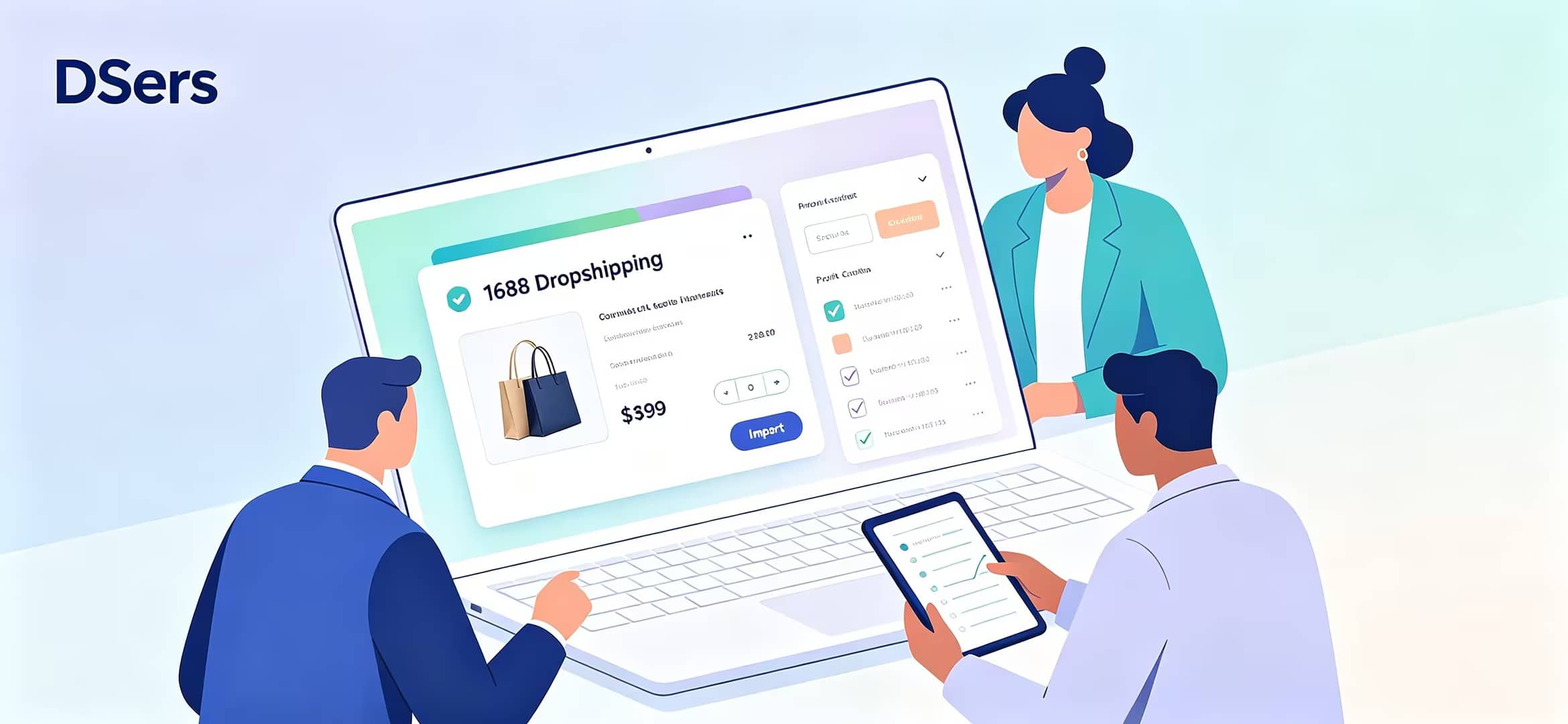
Calculate Costs, Margins & Compare Sourcing Solutions
Your sourcing cost directly determines pricing flexibility and net profit margin.
When auditing a product, collect all cost-related information:
- Base product wholesale price
- Available shipping methods, delivery times and shipping fees
- Supplier service quality and order processing speed
- Available sizes, colours and variant options
- Minimum order requirements and restock stability
When evaluating a product, sourcing options are another important factor to consider. Access to suitable suppliers, competitive sourcing prices, and flexible purchasing conditions can influence your product decisions, pricing strategy, and testing approach.
DSers 1688 Dropshipping allows merchants to explore selected products from 1688 suppliers within the DSers platform. With no minimum order quantity requirements, merchants can test more product ideas without committing to traditional bulk purchasing. This sourcing flexibility helps sellers evaluate products based on their store goals, customer demand, and operational needs.
Conduct Detailed Product Audits Before Importing
Inaccurate product information is one of the top causes of disputes, refunds and negative reviews for dropshipping businesses. Complete this checklist before importing any listing:
Product Specifications
Double-check all technical details: dimensions, materials, weight, colour options and variant attributes. Confirm suppliers provide accurate parameter data to prevent mismatches between listings and delivered goods.
Visual Assets
Evaluate whether product photos and videos clearly display functions, size proportions and real usage effects. Blurry, exaggerated or misleading visuals will trigger high refund rates.
Supplier Background
Learn about the supplier’s reputation, average fulfilment time and historical complaint records. Thorough pre-import checks help you mitigate unexpected operational troubles later.
Run Structured Product Trials with Clear KPIs
Not every tested product needs to become a permanent part of your store.
Controlled testing lets you collect real market feedback before committing to large-scale promotion.
Track these core metrics during your trial period:
- Product page traffic
- Add-to-cart and enquiry rate
- Actual order volume
- Customer feedback, questions and complaints
- Return on ad spend (ROAS)
Set clear elimination rules in advance. If a product fails to hit your target KPIs within your testing window, pause promotion and remove it rather than persistently investing resources. Trials help you identify which items truly resonate with your audience and business strategy.
How DSers 1688 Dropshipping Boosts Your Product Research
Effective product research starts with having an efficient way to explore products that match your business goals.
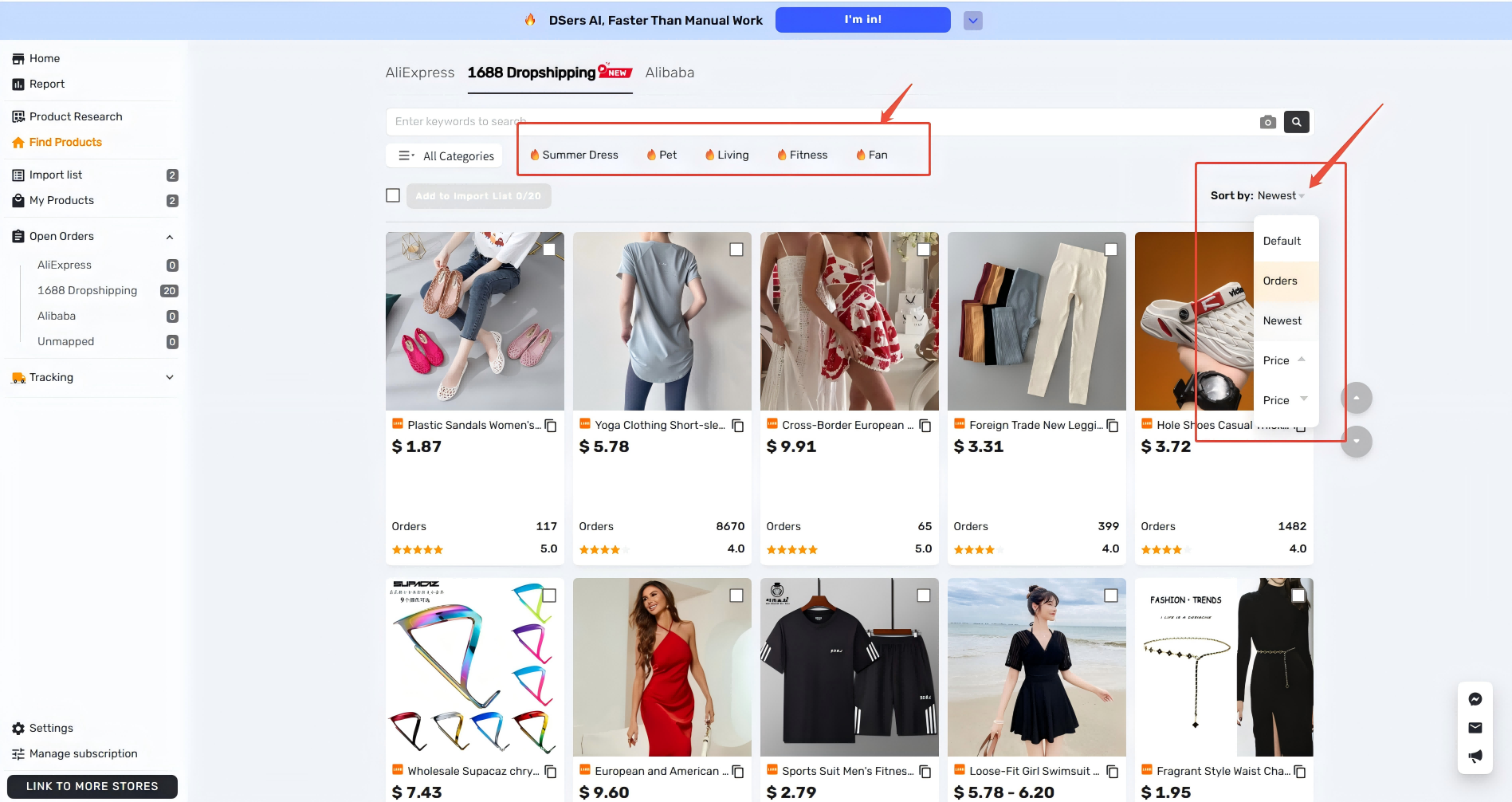
Within DSers 1688 Dropshipping, merchants can browse a curated selection of 1688 products directly inside the DSers platform.
For example, you can:
- Use the category menu to narrow your search to a specific product type.
- Search by keywords to quickly locate relevant products.
- Explore featured collections to discover products related to seasonal or popular themes.
- Sort products by Newest, Orders, or Price to support different research goals.
Instead of switching between multiple sourcing websites, you can review product options within one workspace. Whether you're evaluating a new niche or expanding your existing catalog, having organized product discovery tools can make the research process more efficient.
Additional Key Check: Evaluate Potential Business Risks
A complete assessment system cannot ignore risk factors that often sink dropshipping stores. Always verify:
- Intellectual property risks: Avoid items with copyrighted patterns, branded logos or patented designs to prevent takedowns.
- Logistics limitations: Watch out for oversize, fragile, liquid or battery goods that face shipping restrictions, high breakage rates or long delivery times.
- Compliance requirements: Confirm whether the product needs specific certifications for your target sales regions.
- Return risks: Steer clear of items with widespread complaints about inconsistent quality.
Conclusion
Building a successful dropshipping catalog requires far more than picking items you personally find interesting.
By systematically evaluating customer fit, market demand, competition, profit margins, product authenticity, supplier reliability and operational risks, you can establish a mature, repeatable product selection process.
Before listing new items on your store, fully weigh up opportunities and hidden downsides, and prioritise products aligned with your short-term testing targets and long-term business objectives.
Explore the DSers 1688 Dropshipping product to find items that fit your product research process.
Frequently Asked Questions
Here are some common questions about eBay Business Policies and how sellers can align them with real fulfillment workflows.
|
|
Get Started Now to Grow Your Online Business with the Best Dropshipping Tool - DSers! |




 Live Chat
